Heading 2
NHS Western Isles introduces new security and safety initiatives to protect its staff and patients
Published on 5 February 2026
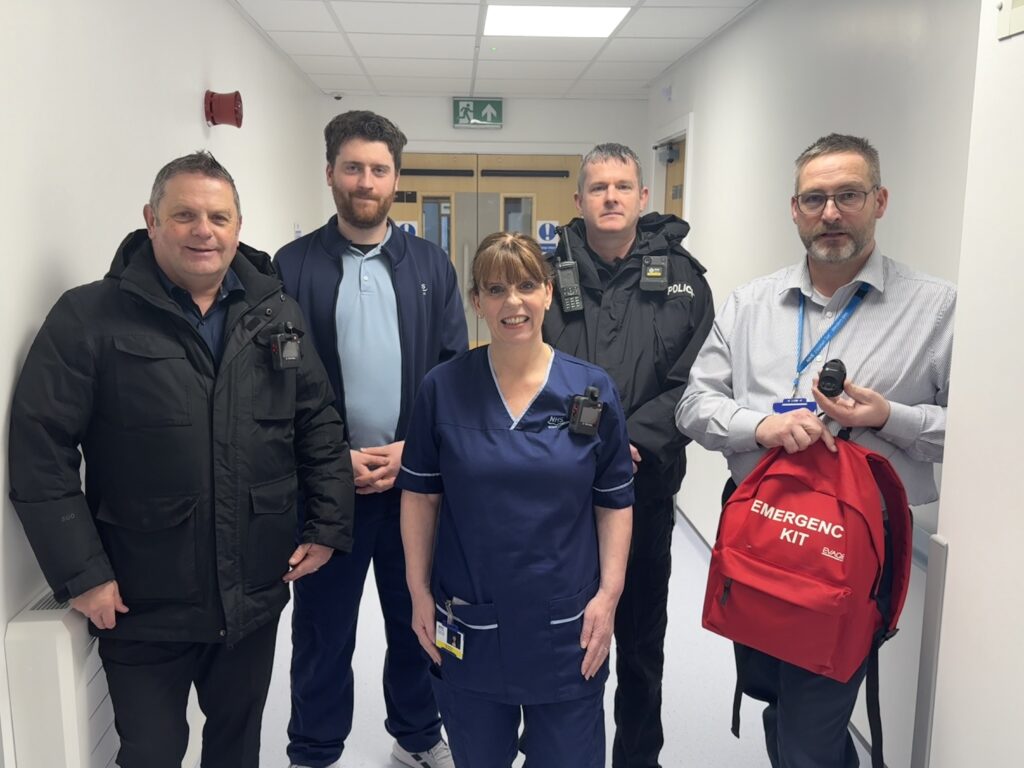
NHS Western Isles is trialling a new range of safety measures to help protect staff, patients and visitors. These include Personal Safety Alarms for staff, Emergency Kits for vehicles, Body Worn Cameras for Emergency Department staff, and enhanced electronic access control in specific clinical areas.
More than 120 ‘MySOS’ personal safety alarms, supplied by Peoplesafe, have been issued to staff, mainly for lone workers working within community settings. These devices, fitted with fall and crash detection, can pinpoint the location of an individual and automatically escalate to relevant parties.
When the ‘SOS’ button is pressed, an alarm centre operator answers and can contact a staff member’s manager or the emergency services if required. You may notice these devices on our staff with lights flashing. Please note that these devices have no camera, no recording ability and no internal memory. A connection is only made when the SOS button is pressed or a fall is detected.
With winter underway, Emergency Kits have been placed in every NHS Western Isles fleet vehicle, as well as being distributed to some colleagues working in the most remote areas of our community. These kits include everything required to maintain comfort and visibility in cold or remote environments including:
- long-life emergency food rations,
- drinking water,
- first aid kit,
- reflective vest,
- foil thermal blankets,
- mini folding shovel,
- hand warmers,
- de-icer spray,
- wind-up torch,
- light sticks,
- whistle,
- ice scraper.
Body Worn Cameras (BWC) are being piloted in the Emergency Department at the Western Isles Hospital following a significant rise of violence & aggression on-site, affecting staff, patients and visitors.
You may see some of our staff equipped with a BWC during a visit within the hospital. These devices do not automatically record audio and video, recording will begin when activated manually if a situation escalates. Clear signage is displayed throughout the hospital, and staff will always verbally notify individuals when a camera is being activated and explain why.
In response to increasing episodes of violence and aggression, electronic access control locks have been installed in the High Dependency Unit and all ward areas. To access these areas, you will need to press the bell button at the entrance and ward staff will facilitate entry. In the event of a fire alarm these locks will release automatically.
These measures are part of a wider campaign to reduce violence in the workplace and demonstrate NHS Western Isles’ commitment staff safety and wellbeing. We continue to work closely with Police Scotland in support of these initiatives.
Gordon Jamieson, Chief Executive, NHS Western Isles, said: “Whilst we continue to live in a relatively safe environment, it is fair to say that we are seeing an increase in security related incidents, and violence and aggression towards our staff. I trust the public will understand that, in response, we have introduced the measures outlined which are necessary to protect our staff and patients in our care. I would like to thank all our health and safety, security, information, IT, estates, and resilience advisers for delivering this important work.”
Inspector Euan Cowan, Police Scotland, said: “No one expects to go to their work and be assaulted or verbally abused. Our NHS colleagues do an excellent job in hospital, community medical centre, and home care settings and Police Scotland fully supports initiatives such as this to ensure their safety. We continue to maintain a zero-tolerance approach to crimes perpetrated against Emergency Workers.”
- NEXT PAGE: Health Protection and Immunisation
- LAST REVIEWED ON: February 5, 2026