Heading 2
Be tick aware – stay safe from tick bites
Published on 21 April 2026
Tick season is here. Warmer weather means more people are outdoors enjoying the Western Isles – but it also means more ticks.
NHS Western Isles is reminding residents and visitors to take simple precautions to avoid tick bites and reduce the risk of Lyme disease.
Isabell MacInnes, Health Protection and Screening Nurse specialist, said “We’re entering one of the busiest times for tick activity. Ticks can carry infections like Lyme disease, so it's important that people know how to protect themselves. Enjoy the outdoors – but take a few simple steps to stay safe and check for ticks daily, especially after time in long grass or undergrowth."
Prevent tick bites
Ticks don’t jump or fly – they latch on when you brush past vegetation. Reduce your risk by:
- wearing long-sleeved clothing and tucking trousers into socks to minimise exposed skin
- choosing light-coloured clothing to spot ticks easily
- sticking to footpaths and avoiding brushing against plants and long grass
- taking extra care in dense vegetation
- using an insect repellent that is effective against ticks.
After being outdoors
Adopt the following routine tick-checking practices after spending time outside:
- brush off clothing (and pets) before entering indoors
- remove clothing once home
- check your body carefully – look and feel for ticks
- pay close attention to hidden areas like behind knees, armpits, and along the hairline
- remove any ticks promptly to reduce the risk of infection, including Lyme disease.
Tick removal tools (available from vets and local shops) are the safest way to remove ticks.
Key areas to check for ticks
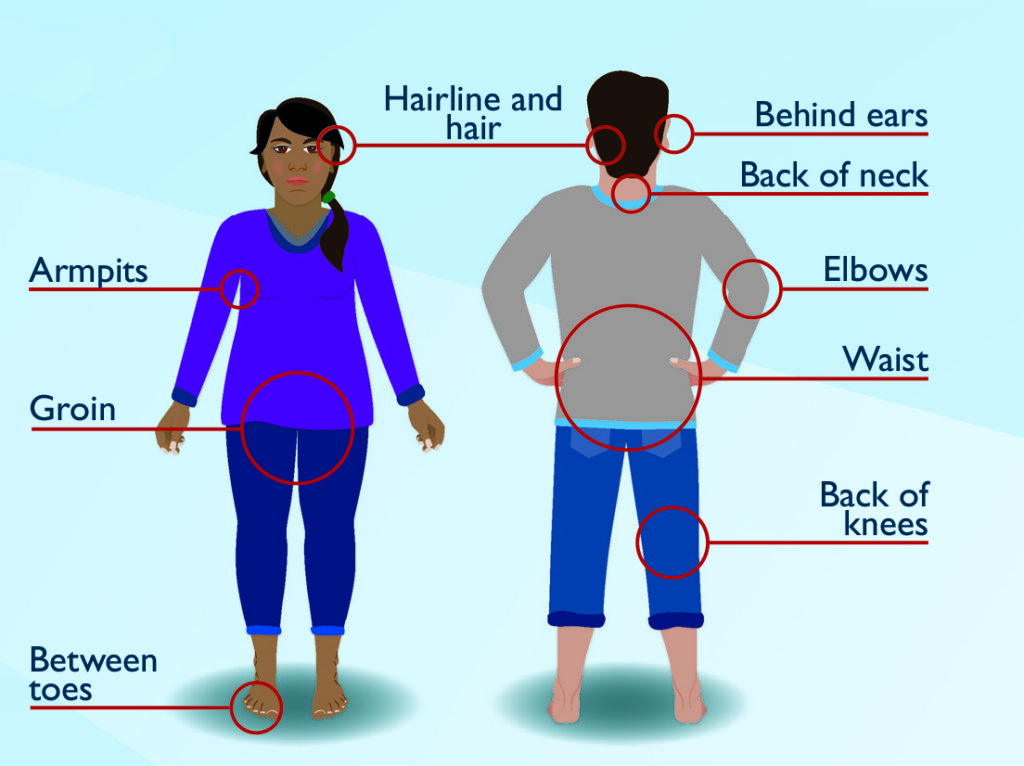
If you find a tick
- Remove it quickly and carefully using a proper tick-removing tool.
- Don’t pull it off with your fingers – this can leave parts behind.
- The sooner it’s removed, the lower the risk of infection.
Removal is best achieved using one of the methods below. A plastic tick removal tool that looks like either a small claw hammer or a credit card works well. These are available in many rural shops throughout the Western Isles.
How to use a tick removal tool
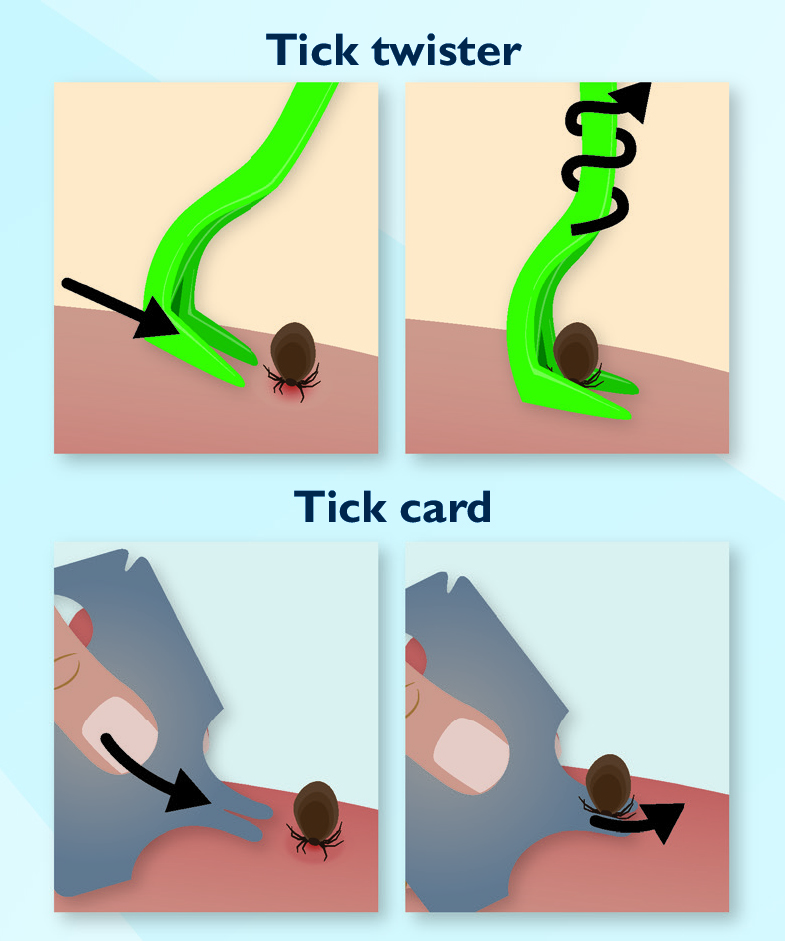
What to look out for:
- Not all ticks carry the bacteria that cause Lyme disease.
- It usually takes more than 24 hours for the tick to deliver bacteria into the human bloodstream, so prompt removal of ticks greatly reduces the risk of being infected.
- Symptoms of Lyme disease include fever, headache, fatigue, and often a skin rash that is round and/or looks like a bullseye (see image below).
- Anyone who develops this rash should contact their GP for diagnosis and possible treatment.
- Lyme disease is treatable with antibiotics, especially if diagnosed early on in the disease.
- Undiagnosed Lyme disease can develop more serious complications and be harder to treat effectively.
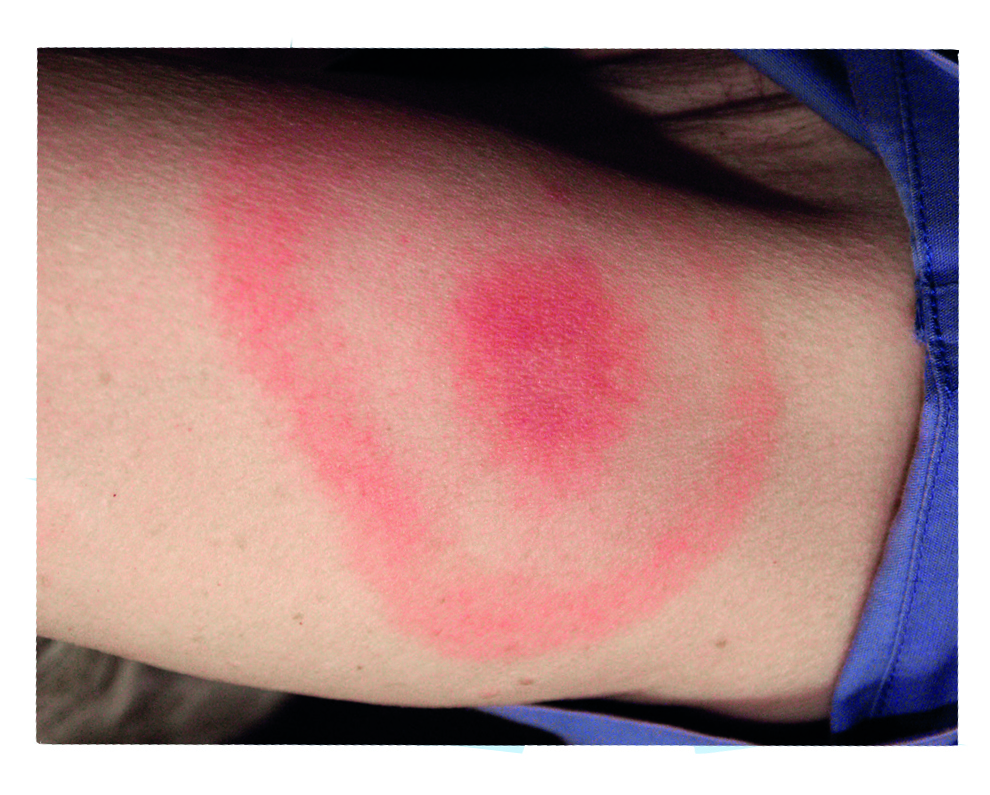
To disseminate the important tick awareness messages, the NHS Western Isles Public Health Team has prepared information packs for local businesses.
Each pack includes a poster, an information leaflet, and a tick-removing tool, and can be requested by emailing wi.hirs@nhs.scot or by telephoning 01851 708055. Gaelic resources are also available on request.
- NEXT PAGE: Health Protection and Immunisation
- LAST REVIEWED ON: April 21, 2026