Heading 2
Tick awareness boost for Lochportain Water Network workforce
Published on 17 June 2026
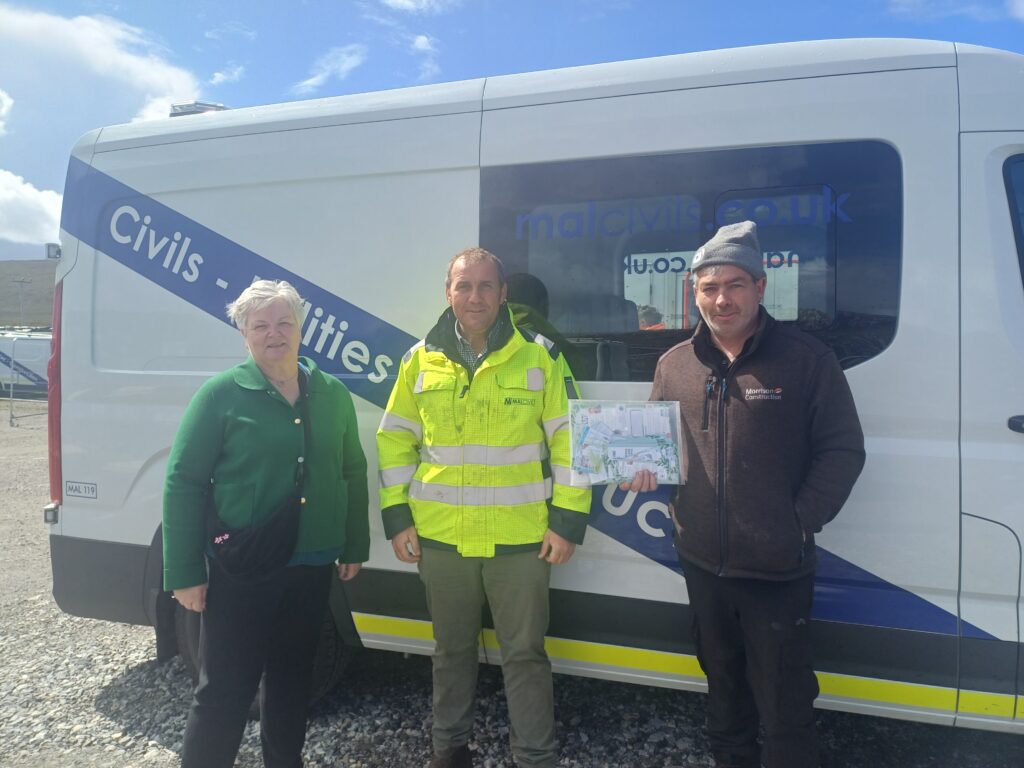

Workers delivering a major water infrastructure project in North Uist have received practical advice and support on how to protect themselves from tick bites while working outdoors.
Following a request from Site Supervisor Neil MacKinnon, Isabell MacInnes, NHS Western Isles Health Protection and Screening Nurse Specialist, visited the Lochportain site. The Scottish Water project is extending the public water network to Lochportain, Cheesebay and Hoebeg.
Delivered by Malcivils and Morrison Construction, the project involves extensive work in areas where ticks are known to be prevalent. Concerned about potential exposure, Neil arranged a dedicated tick awareness session to help keep the workforce safe.
While on site, Isabell also met Donald John MacAulay and Fraser MacKay, who had been proactively reading up on ticks and the risks associated with Lyme disease to better protect their workforce. Their commitment to raising awareness and promoting preventative measures highlights the project's strong focus on employee wellbeing.
Workers shared first-hand experiences of encountering ticks on site, highlighting the importance of the initiative. One employee, Ryan, explained that he had removed a tick from himself the previous week using tweezers.
Isabell provided tick removal tools and information cards, including advice on carrying out regular tick checks, how to remove ticks safely, and how to recognise symptoms of Lyme disease, including the characteristic “bullseye” rash.
The session was well received and forms part of ongoing efforts to promote health, safety and wellbeing across the project. It ensures workers have the knowledge and equipment needed to protect themselves while delivering this vital infrastructure upgrade for the local community on behalf of Scottish Water.
Ticks can carry infections like Lyme disease, so it's important that people know how to protect themselves. Enjoy the outdoors – but take a few simple steps to stay safe and check for ticks daily, especially after time in long grass or undergrowth.
Prevent tick bites
Ticks don’t jump or fly – they latch on when you brush past vegetation. Reduce your risk by:
- Wearing long-sleeved clothing and tucking trousers into socks to minimise exposed skin.
- Choosing light-coloured clothing to spot ticks easily.
- Sticking to footpaths and avoiding brushing against plants and long grass.
- Taking extra care in dense vegetation.
- Using an insect repellent that is effective against ticks.
After being outdoors
Adopt routine tick-checking practices after spending time outside.
- Brush off clothing (and pets) before entering indoors.
- Remove clothing once home.
- Check your body carefully – look and feel for ticks.
- Pay close attention to hidden areas like behind knees, armpits, and along the hairline.
- Remove any ticks promptly to reduce the risk of infection, including Lyme disease.
Tick removal tools (available from vets and local shops) are the safest way to remove ticks.
If you find a tick
- Remove it quickly and carefully using a proper tick-removing tool.
- Don’t pull it off with your fingers – this can leave parts behind.
- The sooner it’s removed, the lower the risk of infection.
Plastic tick removal tools, which resemble a small claw hammer or credit card, are widely available in rural shops across the Western Isles.
Business packs with information about ticks and Lyme disease are available from NHS Western Isles: wi.hirs@nhs.scot
- NEXT PAGE: Health Protection and Immunisation
- LAST REVIEWED ON: June 17, 2026