Heading 2
Click below to view the wide range of services we offer.

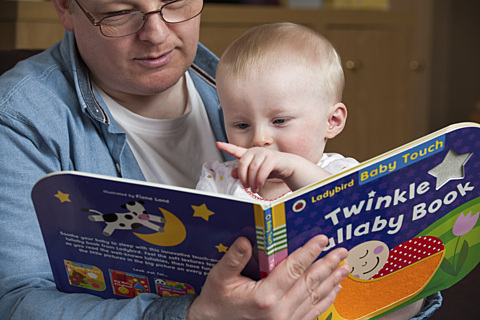
We understand the impact that communication and swallowing problems have on the person’s whole life – interpersonal and social interactions, work, education, mental health, and the ability to live independently.
We provide assessment, intervention and support to children and young people with speech, language and communication difficulties, and problems with eating, drinking and swallowing.
We provide child-centred care by working with everyone around the child to develop personalised strategies to support the child’s needs.
We will assess the child to get a complete picture of their difficulties, strengths, abilities and needs. We may observe the child in nursery/school and at home and carry out formal and informal assessments through play.
We will gather information and work closely with parents and other professionals as part of providing care, including providing training to identity and support children appropriately.
For general information and help with your child’s talking and listening skills visit:
- BBC CBeebies Parenting
- Parent Club – top tips for chatting together with your child
- Chatting Together (English)
- Chatting Together (Gaelic)
- Afasic – voice for life
- Speech and Language UK
- Speech Therapy and Gaelic (STAG)
- Scottish Book Trust
Further support
For information and support with stammering visit:
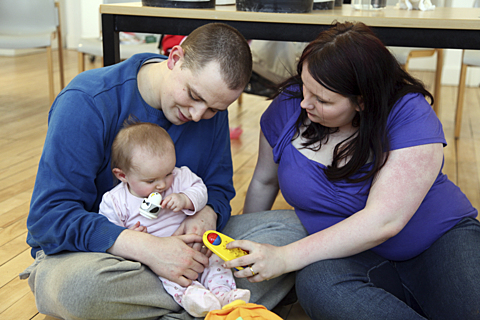
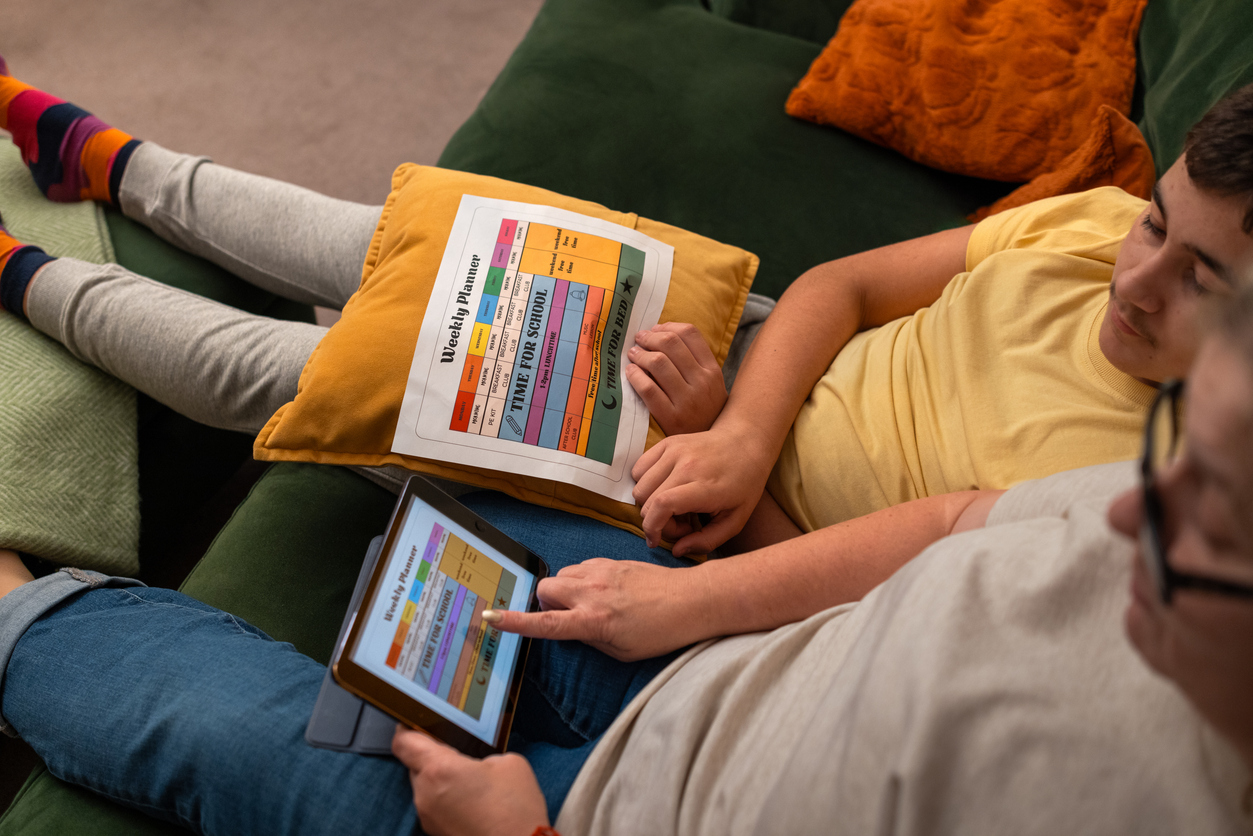
Speech and language therapy are part of the specialist team providing assessment, intervention and support to children, young people and adults with neurodevelopment differences including autism and ADHD.
We aim to enable individuals to be as independent as possible in life by developing new skills and using existing skills in a more functional way. This may involve the use of visual support such as words and pictures as well as practical strategies to help make communication easier.
We work closely with clients, parents and professionals from education and health teams when carrying out assessment and delivering care.
We provide training to parents and professionals as well as interventions at home and school which may be delivered individually or in small groups.
We can also provide advice and signposting to additional information and support networks.
Further support
For further information and support about neurodevelopmental differences visit:

A learning disability is a reduced intellectual ability and a difficulty with everyday activities which affects someone from childhood and throughout their life.
- Around 1.5 million people in the UK have a learning disability.
- Up to 350,000 people have a severe learning disability.
- The term learning disability covers terms such as intellectual disabilities, complex or special needs. It does not cover specific learning disorders of reading (commonly known as dyslexia), written expression or maths.
People with a learning disability tend to take longer to learn and may need support to develop new skills, understand complicated information and interact with other people.
A learning disability may be accompanied by several physical, social, sensory or psychological difficulties. Children, young people and adults with learning disabilities can be supported to live safe, healthy and fulfilled lives in communities.
People with learning disabilities have a wide range of abilities and support needs. Lifelong communication difficulties are a core characteristic for people with a learning disability.
Speech, language and communication needs are wide ranging, may happen in childhood or later in life, and may be hidden or overlooked. People with a learning disability are also at greater risk of eating, drinking and swallowing difficulties.
We work alongside health, social and education professionals to enable people with learning disabilities to have effective opportunities and meaningful participation in communication, eating and drinking as part of everyday life.
Our aim is to improve a person’s understanding, ability to make choices, express themselves and be understood so that they can get the most from education, health and social care including community and leisure services.
Further support
For further information about learning disability visit:
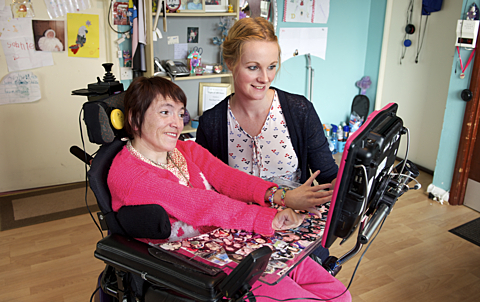
The ability to communicate is a basic human right. For some people, the ability to use spoken words or to speak clearly enough to be understood is difficult.
Communication may be impaired due to lifelong conditions such as cerebral palsy and autism, or it may be the result of an acquired condition such as motor neurone disease, brain injury, or dementia.
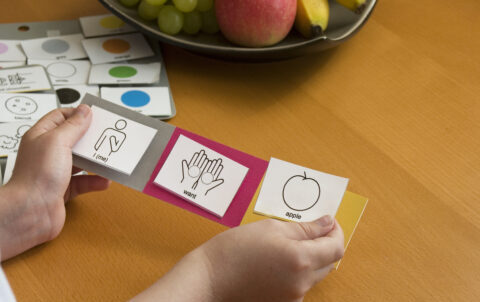
Augmentative and Alternative Communication (AAC) covers a wide range of ways to support or replace spoken communication where speech is challenging. These include gesture, signing, symbols, word or picture boards and books, as well as electronic communication devices using a synthetic voice.
We all use some forms of AAC in everyday life when we wave hello and goodbye, point to things around us, give a thumbs ups, or gesture for the bill in a restaurant!
There are an estimated 26,500 people in Scotland who may benefit from using AAC most or all of the time, and there are many reasons for this.
AAC allows people to communicate efficiently and independently with others in a range of settings including school, home and in a daycare centre.
AAC can provide other ways of communicating to express thoughts, feelings and ideas, and to give information or ask questions. AAC is used alongside verbal communication to enable people to express themselves successfully and be better understood. This is called a ‘total communication’ approach.
Watch the ‘CALL Scotland – Ways to communicate‘ video for information about the different ways we communicate and an introduction to AAC.
Further support
For further information about AAC visit:
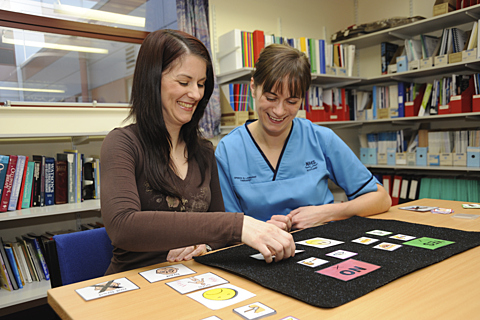

We provide specialist assessment, interventions and advice to people living with a range of neurological conditions affecting communication and swallowing including:
- stroke and other conditions affecting the brain including head trauma, infections and tumours
- Parkinson’s disease, multiple sclerosis, motor neuron disease and other progressive neurological conditions
- acute and long-term neuromuscular conditions
- functional neurological disorders
- dementia.
We may see you in hospital and/or at home as part of your care. Treatment may involve education and rehabilitation of speech, language and cognitive-communication problems as well as difficulties with eating, drinking and swallowing.
This may involve specific exercises, finding strategies to communicate successfully in different situations, or changes to the way you do things to make communication and swallowing easier. We aim to increase your ability and confidence taking part in the activities you enjoy, the way you want.
Sometimes, alternative and augmentative communication (AAC) devices are recommended to help you communicate effectively and independently where speech is challenging.
We also support and provide training to families, carers and professionals in practical ways of supporting people with communication and swallowing difficulties.
Watch ‘The art of conversation with aphasia' video, which shows information about a common communication disorder after stroke called ‘aphasia’.
Further support
Further information about neurological conditions can be found at:

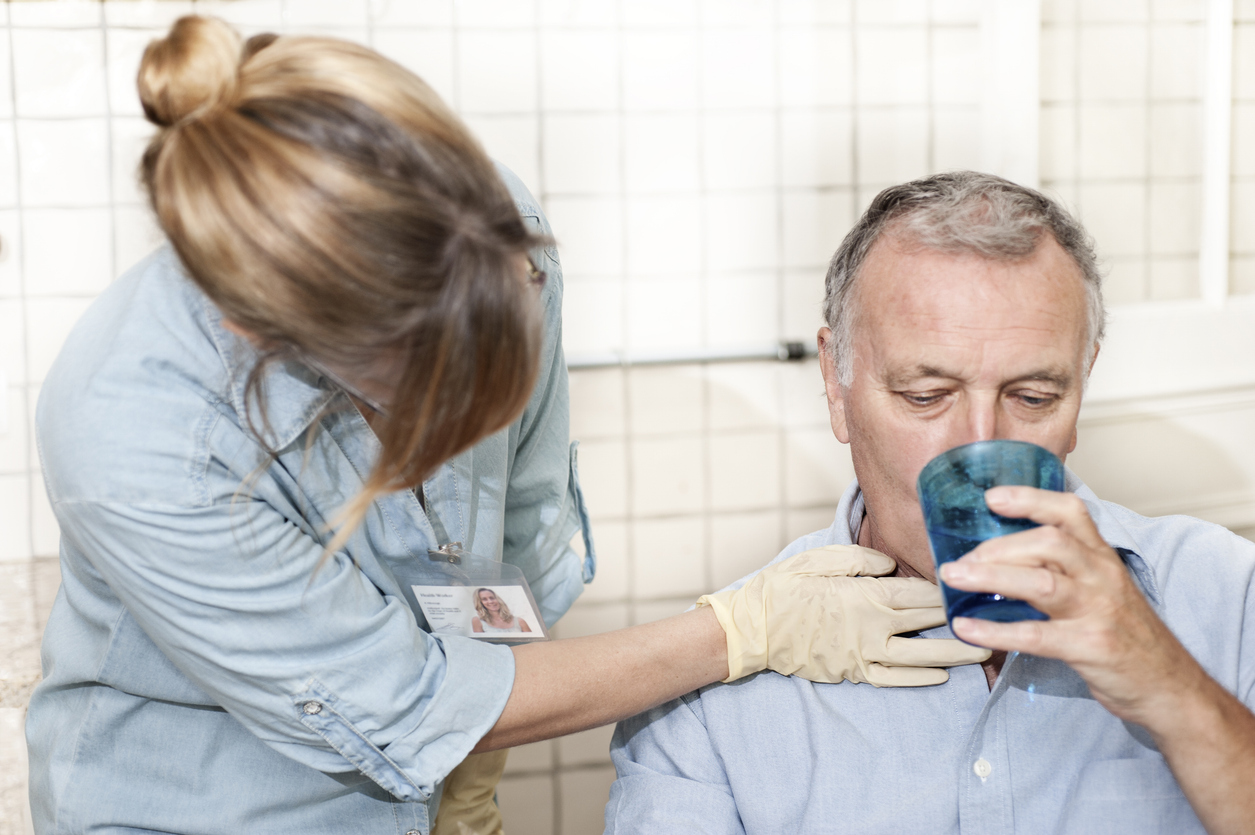
We provide specialist assessment, treatment and advice to people with problems affecting the sound of their voice, uncomfortable throat sensations, chronic cough, upper airway breathing problems and swallowing difficulties. These may be caused by a range of conditions affecting the throat and the nervous system.
You may have already seen an ENT (ear, nose and throat) doctor or respiratory doctor who has recommended speech and language therapy treatment for you. If you haven’t already seen an ENT doctor, we may recommend you see one first, before therapy begins.
Therapy may include education and advice, specific exercises and practical strategies to help reduce your symptoms.
For certain types of problems, we may carry out an Xray swallowing test at Western Isles Hospital.
Further support
For further information about voice, throat and swallowing difficulties visit:
- NEXT PAGE: Speech and Language Therapy - What are communication support needs?
- LAST REVIEWED ON: July 15, 2026